
In developing Martial Arts expertise, one attempts to develop correct technique by developing the correct frames for each technique. Expertise is displayed by having a fluidness with one technique flowing into the next; just as if watching a movie made up of individual frames. The beginner attempts to copy an “expert”, but is unable to “see all of the frames”. Sight depends on the data presented to the brain. The brain then interprets this data understood to be movement or technique.
The human brain is very clever, but it is also easily tricked. This is the reason television and movies work. The eyes present the brain with a quick sequence of similar images. The brain very easily sees a pattern and interprets the presented data as continuous motion. Let’s look at this for a moment.
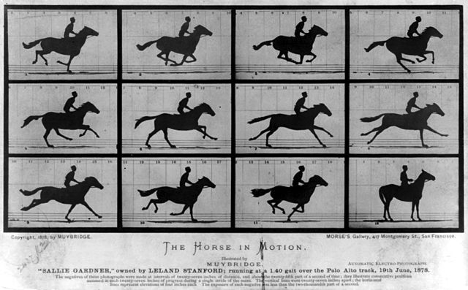
Animation, television, movies, video games – they all rely on tricking the brain to present their story. For most of history an analog camera was used to capture live events and commit them to film. More recently digital cameras do the same with a distinct advantage: perfect frame capture. It’s the difference between pausing a DVD or BlueRay and a VHS tape (remember those…?). The drawback is that it takes a higher frame-per-second (FPS) capture rate with digital than with analog to fool the brain. The reasons for that are beyond the scope of this article. Suffice it to say it has to do with the way analog film blurs the image when the captured action is very fast.
Video games in particular, being an inherently digital medium, must present the action on the screen at very high FPS to be convincing. Where film gets away with 24 FPS and TV goes at around 30, the gold standard for video games is 60 FPS. This 60 frames per second are indistinguishable from fluid, continuous motion as seen by the eye in the real world. In comparison, the beginning martial artist struggles at 10 FPS. A black belt may be at the 24 to 30 FPS stage. The idea of developing techniques to the point of 60 frames per second is a note worthy goal.
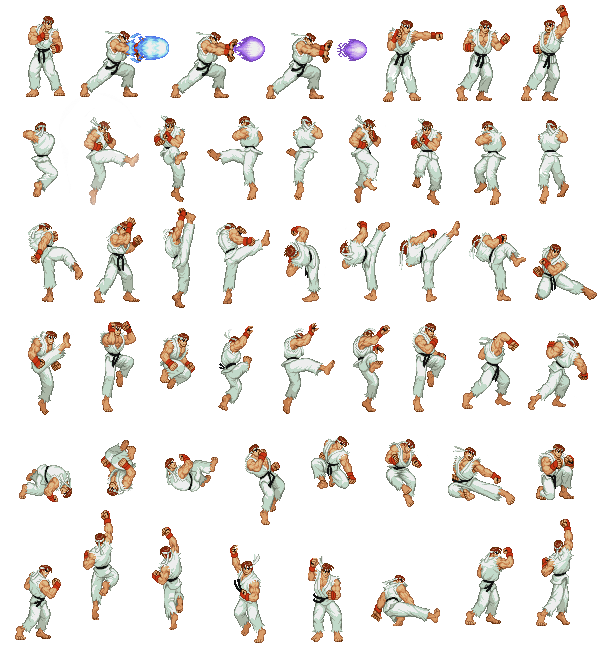
Watching a martial artist going through a form and hitting the “Pause button” mid-stance to analyze their technique is invaluable as a teaching tool. When taking video of a properly executed sequence of techniques or form (kata) or anything else involving pre-set stances and motions, a video camera running at 60 FPS won’t lie. There will be a frame that will look like the textbook picture of the technique. If this frame is missing then the martial artist has skipped that frame, rushing their technique. Show the correct frames in each technique. If too many “frames”, or techniques are missing, then the martial artist will need to practice their form more. Expertise is gained by developing proper form. Include all of the frames.
When a marital artist first learns a form, each step is very slowly counted. Each stance and technique is practiced, repeated, corrected, and repeated again. Each count aims to end on that magic textbook frame. Motion becomes more fluid once the form (data) is properly stored in the muscle memory. Steps (frames) move from one to the next in a particular rhythm as dictated by the specific form. There are very few pauses to be found… but the frames are still there. Should still be there! A well-practiced Martial Artist will display the frames moving from step 1 to step 2. There is something to be said about the frame at 1.25; you can’t neglect those transitional stances. Then, notice the wrist rotation that starts at step 1.50. And the way the anchoring foot pivots at step 1.75… it can get as granular as needed, to be sure.
In short, develop Martial Arts expertise by developing proper form. Don’t skip frames. Also don’t linger. A frame only lasts a sixtieth of a second after all. Remember though, even if the brain can be tricked, it is clever enough to recognize when frames are skipped!! Then you have that Sensei’s narrowing eyes and making mental notes of the missed frames to correct the student. They seem to see everything!!