
Working systems are a marvel to behold. Every component part of it working in concert, a grand harmony of interconnected pieces producing a final result, or just a continuation of the system itself. From just about any perspective, any such working system is opaque in its operation and invites no closer scrutiny. It is only when the system – in whatever small part it may be – fails we can see how it works.
When I was a child I would frequently take apart my toys “to see how they work” even though I had very little notion of what the heck I was discovering inside that RC car. In the same way are animal dissections performed, to be able to get a glimpse of the inner workings of said animal. I didn’t understand the process by which my bicycle chain pulled on the cogs of the back wheel when I turned the pedals until the it slipped off its railings and I had to carefully (without skinning my fingers) put it back in.
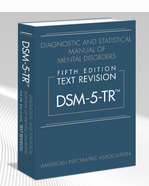
The human body is a mess of overlapping systems all doing their best to keep us alive enough to get us to the next meal. Every single part of this vastly complex concert can and will fail in inconvenient, entertaining and tragic ways – and when they do, they’ll give us information about how that was supposed to work beforehand. Take for instance the DSM-5. (Diagnostic and Statistical Manual of Mental Disorders) Every condition described in that book gives psychologists a hint of how the most weird and mysterious operations of the human brain work and doctors are always interested in studying the ways in which the body and mind fail to work as expected for that very reason. In addition to caring for the patient, of course!
This all relates to karate by way of the interplay of the two systems at hand: the human body vs the martial art.
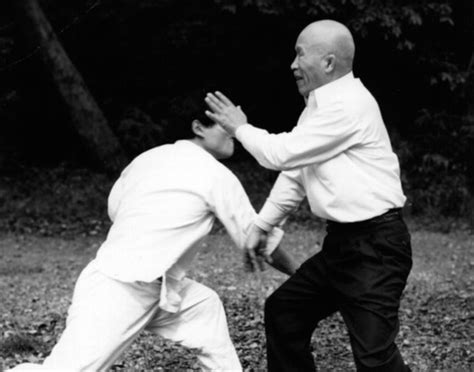
Karate was developed in Japan in the 19th century, by Japanese middle aged men, for Japanese middle aged men. The art can and will fail when applied in unexpected ways. How will a large European woman fare? A tall African man? Or any other of the wide spectrum of the human experience? It is here in these cracks that we can learn about how karate works, the fun and interesting ways it can be patched up to continue to offer the same intent and results for wildly different people.
To add another layer of complexity (of fun!) we should now add that all these people practicing karate will invariably have bodies which can and do change in odd ways. A twisted ankle, an arthritic shoulder, a leg longer than the other, pregnancy, tennis elbow… and any of the DSM-5 diagnoses. Each condition can change the way the body moves and thereby must change the way the body does karate.As an example of this, I recently started having a bit of pain in my hip joint when pulling the restroom door at work open. It has a foot pedal that was installed during the height of the pandemic panic so we wouldn’t have to touch the handle. We know now that’s not how you catch COVID but that’s not the only bug in the world and I’m happy to keep pulling the door open with my foot rather than my hand.
When it fails, we can see how it works.
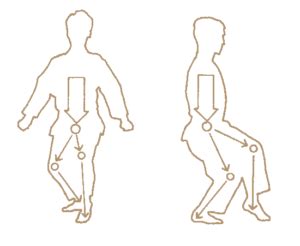
That is until I started getting this sharp pain in the back of the joint where my femur connects to the hip every time I pulled. In order to alleviate the pain, I found myself bending the base knee, lowering my body, allowing for more muscles to get involved in the pulling motion… in other words, I got into neko ashi dachi (cat stance). In the process of working with my suddenly failing body, I “reinvented” stances; or at least how to use stances. My body failed. I learned why and how stances work: they allow for better weight distribution, more efficiency of motion, reduced impact on the joints!
We must forever consider new body types and increase our understanding of the art in order to continue on the path of improvement. The “When it fails, we can see how it works” process will help to increase this understanding. Hopefully we can help prevent failures, at least the more painful ones, for others. Not perfect, no – but, a little less wrong
Thank you
Francisco Berro
Check out other blogs by Francisco:
How to become good
Three Ingredients
Kata are songs
Best Fighting Style: Rock-Paper-Scissors
Is Martial Arts Language?
How to Develop Martial Arts Expertise