
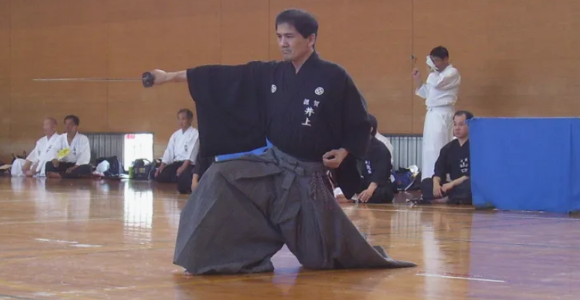
This blog was copied from Peter Boylan’s blog. The blog’s feature image Photo Copyright belongs to Peter Boylan 2026. Full credit of the following paragraphs goes to him. I have copied other blogs of his, as he has given permission in the past to do so. Please visit his blog-site for more! Great guy and Martial Artist. Here is the link to the original blog: Switching Martial Arts Styles.
While browsing reddit, I came across a user who said they were a member of the Ki Society for ten years but had recently moved to an area without any dojos within commuting distance. They asked whether it would be possible to transition to Aikikai, which does have local dojos, without having to start over from scratch.
I’ve heard similar questions many times. Someone has been training for a while in one style of martial arts and wants to train in a different style, and to be recognized in the new style at the same rank they are in the previous style. I get it. The thinking seems to be, you’ve invested a lot of time in a style and you want to be recognized for that. It feels like you’ve wasted your time if you have to go back to beginner status in a martial art that is similar to the one you’ve been training in.
I have to ask: why are you training?
Are you training to acquire rank and status in an obscure martial arts organization? (Let’s be honest, most martial arts organizations are obscure in the world we live in. Outside their own members, few people even know they exist.)
Or are you training to master yourself and a martial art?
The fact that this question is being asked suggests that said person is training to acquire rank and status, which I will admit are important to a lot of people for a lot of reasons. I just don’t think they are of much real value or relevancy to the practice of any form of budo.
We train for many reasons: to become stronger, to defend ourselves, to become better fighters, to be physically respected, to improve ourselves as human beings, to master deeper principles that are taught through training, and sometimes just for the joy of it.
Sometimes this is simply stated as: “I want to get a black belt.” Which often stands in for: I want to be stronger, a better fighter, and be physically respected.
Clearly the questioner likes training. The problem here is that they are very attached to the rank and status they have achieved in the Ki Society, and they are confusing the symbols of achievement for the real achievements, which are the skills and growth they have acquired through training. I’m sure the Aikikai wouldld not consider giving them equivalent rank, simply because the syllabi are not equivalent. Their skills, though, would not disappear just because they are training in an Aikikai dojo rather than a Ki Society dojo. They would still have their physical and technical mastery regardless of the color belt they are wearing—and if that isn’t respected by the new group members, I doubt it would be a place you want to train at anyway.
Looking at the question from a slightly different angle, after 10 years of regular practice, your understanding and mastery of the Ki Society syllabus should be pretty solid. Training with the Aikikai is a great chance to see the art from a slightly different perspective, and perhaps work on aspects of Aikido that haven’t been emphasized in the current dojo. The Aikikai and the Ki Society have differing pedagogies, but ikkyo, nikyo sankyo, yonkyo, iriminage, and shihonage are the same techniques in both organizations. They simply use different methods to teach them.
The only thing you have to lose by training in a different dojo is your attachment to your rank. In exchange you gain new perspectives on your art, new training partners, and new opportunities to grow.
This is an instance where ranks and their acquisition is definitely a negative influence on budo training. If we didn’t have all of these ranks, it would be easy to go into a new dojo and be a beginner there. We wouldn’t be “giving up” any rank or status. After all, it takes time and effort to achieve any rank in budo, and Rank Hath Its Privileges. Who wants to just give up anything we’ve worked so hard to achieve.
Each organization has their own requirements for their ranks, and to be recognized as a 1st dan in Iaido in the International Kendo Federation has nothing whatsoever to do with being recognized as a 1st dan in the All Japan Iaido Federation. Their test requirements are different. They require demonstrated skill in different kata. If I were to go into an Iaido Federation dojo, I would go straight to the lowest rank in the room. Sure, I know something about Kendo Federation Iai. I’ve managed to get to 5th dan in the Kendo Federation Iai system. I know nothing of the Iaido Federation’s Iai system though. I don’t even know the kata they use for training and testing. How could I expect to be recognized as a 5th dan by the Iaido Federation when I don’t even know the basics of their kata?
The same is true moving between Aikido federations, or Karatedo federations, or moving from one koryu to another. Just because I have a shihan certificate in one koryu doesn’t mean I should expect any sort of recognition if I go to another koryu art to train. When I go into a dojo where another ryuha is practiced, I don’t talk about my Shinto Hatakage Ryu experience, and no one asks about it. It’s not germane to what we are training.
All of that doesn’t mean that my Shinto Hatakage Ryu training is worthless when I train in Shinto Muso Ryu, or that having lots of experience in Ki Society will be meaningless when someone goes to train in an Aikikai dojo. It just means you’ll sit a little further down the line in one dojo than in another. My Shinto Hatakage Ryu training has taught me a great deal of universally useful stuff about movement, controlling my body, handling weapons, and how to be respectful in the dojo.
I think the whole modern rank system developed by Kano Jigoro Shihan is a mistake, in part because people’s attachment to it gets in the way of their training and growth as martial artists. A huge amount of time is wasted worrying about “keeping my rank” when people have to make the choice between quitting and being beginners in a related style. Cross training is great for improving our understanding of budo. I remember the great Aikido-L Aikido Seminars, and watching senior Ki Society teachers swapping techniques and training tips with Aikikai teachers and folks from dojos that aren’t affiliated with anyone but themselves. No one cared who was a 6th dan or a 1st dan or even asked about rank. The question being asked in every instance was, “What can I learn from this person?”
Thanks for reading! Subscribe for free to receive new posts and support my work.
No one there had any delusions of having all the answers. Budo is infinite. It’s a gem with an infinite number of facets. We will never have a complete understanding of it. We do the best we can, and the more people we learn from, the more facets of the gem we can learn to see. I love training with people who have different experiences from mine. In the group I train with, we have people from a wide variety of styles: Shinto Muso Ryu, Shinto Hatakage Ryu, Tamiya Ryu, Tendo Ryu, Mugai Ryu, Kodokan Judo, Aikikai Aikido, Kendo, Muso Jikiden Eishin Ryu, Muso Shinden Ryu, and those are just ones I am aware of. The only question that comes up is, “What are we learning?”
All that varied experience means that when we have a discussion about technique or strategy or principle, there is almost always someone bringing novel perspectives to bear on the question. We are all in the dojo to learn together. Most of the time that means we shut up and train. Sometimes it means that we ask each other about the insights our other budo experience gives us into what is happening with our current training.
When you go from one style, system, or organization, you’re never really starting from the beginning. If you are going into a related style, system, or organization, you’ll be bringing a wealth of knowledge and experience with you that will inform and accelerate your new training. Even if you’re going into something that is completely different from your previous training, you will be surprised at how much carries over. Knowledge of fundamental things like spacing, timing, structure, and movement will always be useful.
When you go into a new dojo or start a new style, you’re not starting from the beginning. You’re starting from where you are. The only thing you might have to give up is your attachment to the rank you’ve gotten somewhere else.
Special thanks to Jacques Vorves for editorial support.
Thanks for reading! This post is public so feel free to share it.

Peter Boylan
Thank you Peter for the wisdom you share. Here is our blog under Frequently Asked Questions. Can I Keep My Current Rank? Yes, this question comes up a lot. Those who understand Martial Arts usually has no problem starting in a new place at the beginning. Again, any experience you have will show up quickly! Don’t worry about it….